

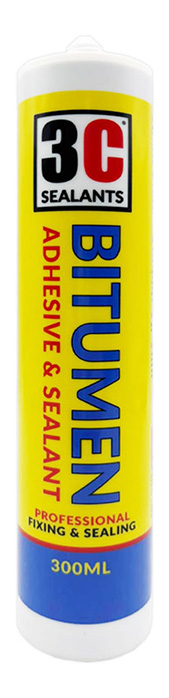

BITUMEN
ADHESIVE & SEALANT
Well priced - Honest & reliable bitumen product
Fix & bond - Works great as an adhesive
Long lasting - Withstands extreme weather conditions
Water tolerant - Can be applied under water
3C BITUMEN ADHESIVE & SEALANT - COLOUR
-
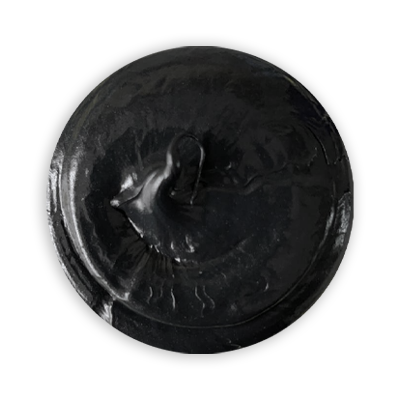
Black
CRAIG PHILLIPS (from MR AND MRS DIY)
3C BITUMEN ADHESIVE & SEALANT FAQ's
As bitumen sealants are primarily used against existing asphalt or bitumen-based surfaces, the resistance and compatibility differ to other sealants such as silicone.
3C Bitumen Adhesive & Sealant stays relatively soft and slightly tacky as it's constructed from premium bitumen and SBS elastomers. What does this mean? It's thermoplastic, not a curing polymer.
Why it stays soft
There is no chemical curing or cross-linking.
The material remains a viscoelastic mass meaning it can flow slowly under stress but also resist deformation.
The notorious tackiness comes from:
High molecular-weight hydrocarbons that are sticky.
- Oils and plasticizers that remain permanently in the mix.
How 3C Bitumen “cures” or “sets”
It's solvent-based, so only “sets” by solvent evaporation, not chemical change.
Even after setting, the molecular structure is essentially the same.
Heat makes it softer; cold makes it harder (reversible behavior) perfectly suited to standard and/or extreme weather variables.
The purpose of not fully curing or setting
- Self-healing air bubbles, small cracks and digs etc.
- Stays flexible with movement (either from changing temps. or trauma)
- Adheres to rough, uneven, dirty surfaces. (Even damp surfaces).
- Useful in roofing, pavement, and damp-proofing where rigidity would cause failure.
As detailed in the q&a above, 3C Bitumen Adhesive & Sealant is non-setting by design thus doesn't rubberise. When compared to common mastic sealants such as silicone and hybrid polymers, this means that the material will adjust better to weathering extremes etc. especially when used in conjunction with waterproofing-specific products such as roofing felt, fascias and guttering.
Bitumen sealants and silicone sealants serve different functional purposes. The choice between them is primarily driven by substrate compatibility, weather conditions, and the general required performance characteristics.
Reasons to use bitumen sealant instead of silicone:
1. Compatibility with bituminous substrates
As opposed to silicone sealants, bitumen sealants chemically and physically bond to:
Asphalt
Bitumen membranes and felts
Roofing materials (e.g. shingles, torch-on membranes etc.)
Silicone generally performs poorly on bituminous surfaces, with reduced adhesion, chemical incompatability and a higher risk of failure.
2. Superior waterproofing in construction and roofing
Bitumen sealants are designed to provide robust, water-impermeable seals, making them well suited to:
Roof openings & penetrations
Flashings
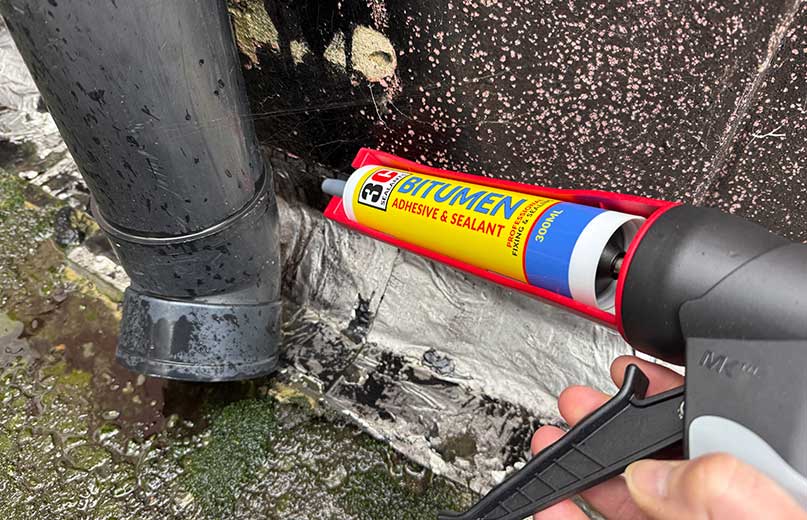
Guttering joints
Permanently wet conditions
Silicone is, of course water-resistant, but, it's not ideal for long-term immersion or heavy water loading in construction assemblies.
3. Performance on damp or wet substrates
Bitumen sealants can often be applied to slightly damp surfaces and still cure effectively. Silicone typically requires clean, dry substrates for reliable adhesion.
4. Cost effectiveness for large or non-visible applications
Bitumen sealants are usually:
Lower cost
Available in larger volumes
Adequate for utilitarian sealing where aesthetics are not critical
Silicone is comparatively more expensive and better suited to precision or visible joints.
5. Movement tolerance aligned with rigid assemblies
Bitumen sealants accommodate limited movement, which is acceptable in:
Masonry
Roofing layers
Static construction joints
Silicone excels in high-movement joints (e.g. glazing, expansion joints), which may not be required in many roofing or groundworks applications.
In summary
Use bitumen adhesives & sealants versus silicone sealants where sealing or repairing bituminous materials, roofing systems, or damp construction areas where waterproofing and compatibility matter more than appearance or elasticity.
Use silicone for clean, exposed, high-movement joints on non-bituminous substrates.
As usual, if you have any further technical queries regarding the use of 3C Bitumen Adhesive & Sealant, you can consult the Technical Data & Material Data Sheets (found here) . Or contact our technical sales team in the office here.
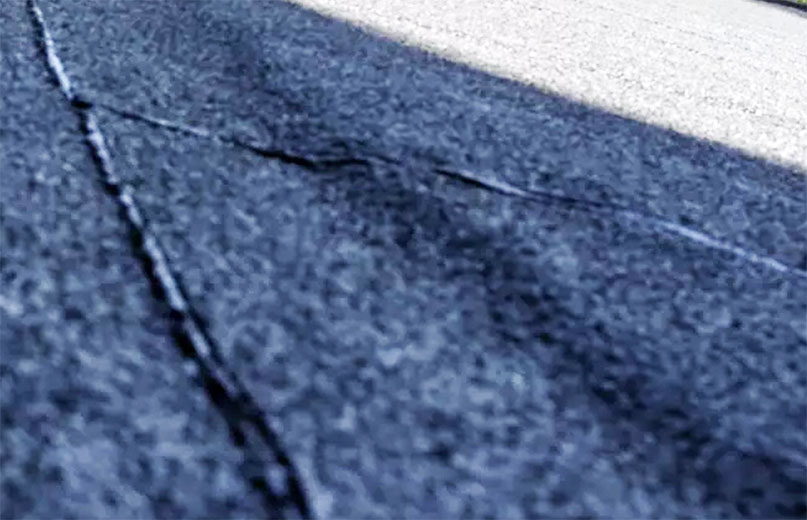
The short answer is yes, bitumen sealants (and/or adhesives) are specifically formulated to be applied directly to asphalt and bitumen surfaces, such as roofs, parapets, skylights (including fixtures & connections) as well as roadways, walkways and other vehicle and/or pedestrian infrastructure.
Basically anywhere that an existing asphalt, mineral felt or bitumen-based surface is present.
The fact that you can use 3C Bitumen Adhesive & Sealant directly against these somewhat volatile surfaces is one of it's primary advantages over using silicone and many other general mastic sealants which often struggle to adhere reliably to these same substrates because of oils and plasticisers that are already present.
Why is it best to use bitumen on asphalt or bitumen?
1. Material compatibility
Bitumen sealants are bitumen-based or bitumen-modified, meaning they are chemically compatible with:
-
Asphalt
-
Bitumen roofing felt
-
Torch-on membranes
-
Shingles and mastics (often trowel-applied)
This compatibility allows the sealant to bond onto and penetrate into the surface rather than just sitting on top of it.
2. Strong adhesion without primers (in most cases)
On sound, aged bitumen or asphalt, bitumen sealants typically:
-
Adhere without a primer
-
Maintain adhesion even as the substrate cycles through weathering
3. Tolerance of damp substrates
Many bitumen sealants can be applied to:
-
Slightly damp surfaces
-
Surfaces with residual moisture
- Directly into puddled areas (caution should be used)
This makes them practical for external roofing installation and repair work where perfectly dry conditions are difficult to achieve.
4. Designed for constant differing weather exposure
When applied directly to asphalt or bitumen, bitumen sealants provide:
-
Excellent water impermeability
-
Resistance to standing water (depending on product)
-
Performs well under thermal movement typical of roofing systems
---Important limitations to be aware of---
-
Surface condition matters: The asphalt or bitumen must be sound, clean of loose debris, and free from ponded water.
-
Fresh asphalt: Newly laid asphalt may need time to cure and off-gas before sealant application, depending on manufacturer guidance.
-
UV ageing: Standard bitumen sealants can oxidise and chalk under long-term UV exposure unless they are modified or protected (e.g. with a reflective coating).
Summary
3C Bitumen Adhesive & Sealant can be applied directly and effectively to asphalt and bitumen surfaces and is usually the correct choice for sealing joints, penetrations, laps, and repairs in bituminous roofing and paving applications.
Bitumen adhesive and sealant is typically used in construction and roofing applications where compatibility with bituminous materials such as asphalt, mineral felt and bitumen-based liquids and sheets is required.
Performance-wise, the seal needs to be strong, waterproof and durable in exposed conditions where extremes of weather affect the material such as thermal expansion and contraction, UV stability, high winds and driving rain etc.
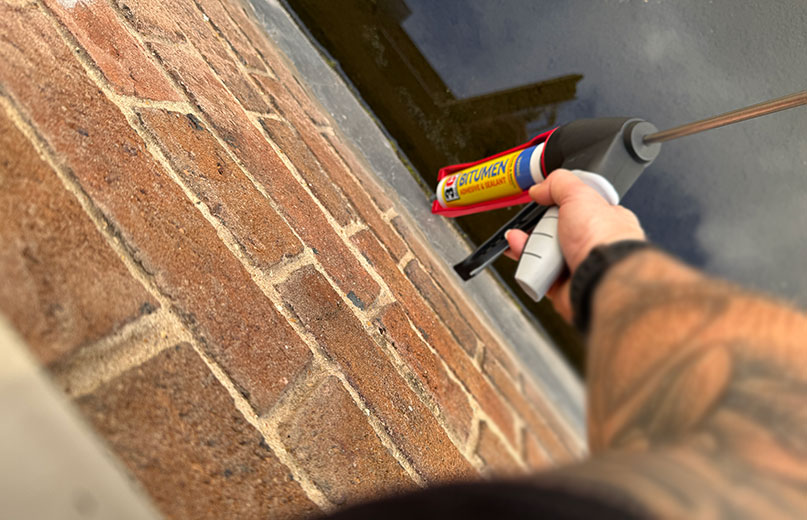
Typical application areas of bitumen adhesives & sealants Roofing and weatherproofing - Sealing laps, joints, and overlaps in bitumen roofing felt and membranes - Sealing around roof penetrations (pipes, gutters, vents, ducts, fixings) - Flashing details at parapets, upstands, and abutments - Repairs to cracked or split asphalt roofing - Bonding and sealing roof tiles, ridge tiles, and shingles - Guttering and rainwater systems - Sealing joints in metal, plastic, and bituminous gutters - Repairing leaking gutter seams and end caps - Sealing penetration points where they pass through roofs or walls - Below-ground and damp-proofing works - Sealing and bonding damp-proof membranes (DPMs) - Sealing joints in tanking systems and below-grade waterproofing - Repairs to bitumen-coated foundations and retaining walls - General external construction - Sealing joints in masonry, concrete, and stone where water resistance is critical - Filling cracks and gaps in asphalt pavements and hardstandings - Bonding insulation boards or protective layers to bitumen surfaces - Temporary or remedial works - Emergency roof leak repairs - Temporary weather seals during construction - Maintenance sealing where surface conditions may be damp or contaminated - Where bitumen adhesives or sealants aren't typically used - High-movement expansion joints - Internal decorative or sanitary joints (bathrooms, kitchens) - Glazing, glass, or polished architectural finishes - Areas requiring paintability or colour stability Summary
3C Bitumen Adhesive & Sealant would be most commonly applied in roofing, guttering, damp-proofing, and external construction detailing, particularly where the existing substrate is asphalt or bitumen-based and long-term waterproofing is the priority rather than movement accommodation and/or cosmetic appearance.
Still have questions about Bitumen Adhesive & Sealant?
BUY MORE SAVE MORE 3C BITUMEN ADHESIVE & SEALANT
1-9 x Carts
From
- Black 300ml
25-1199 x Carts
From
- Black 300ml
10-24 x Carts
From
- Black 300ml
1200 x Carts
From
- Black 300ml
REASONS TO BUY 3C BITUMEN ADHESIVE & SEALANT
3C BITUMEN ADHESION & SEALANT APPLICATION IDEAS